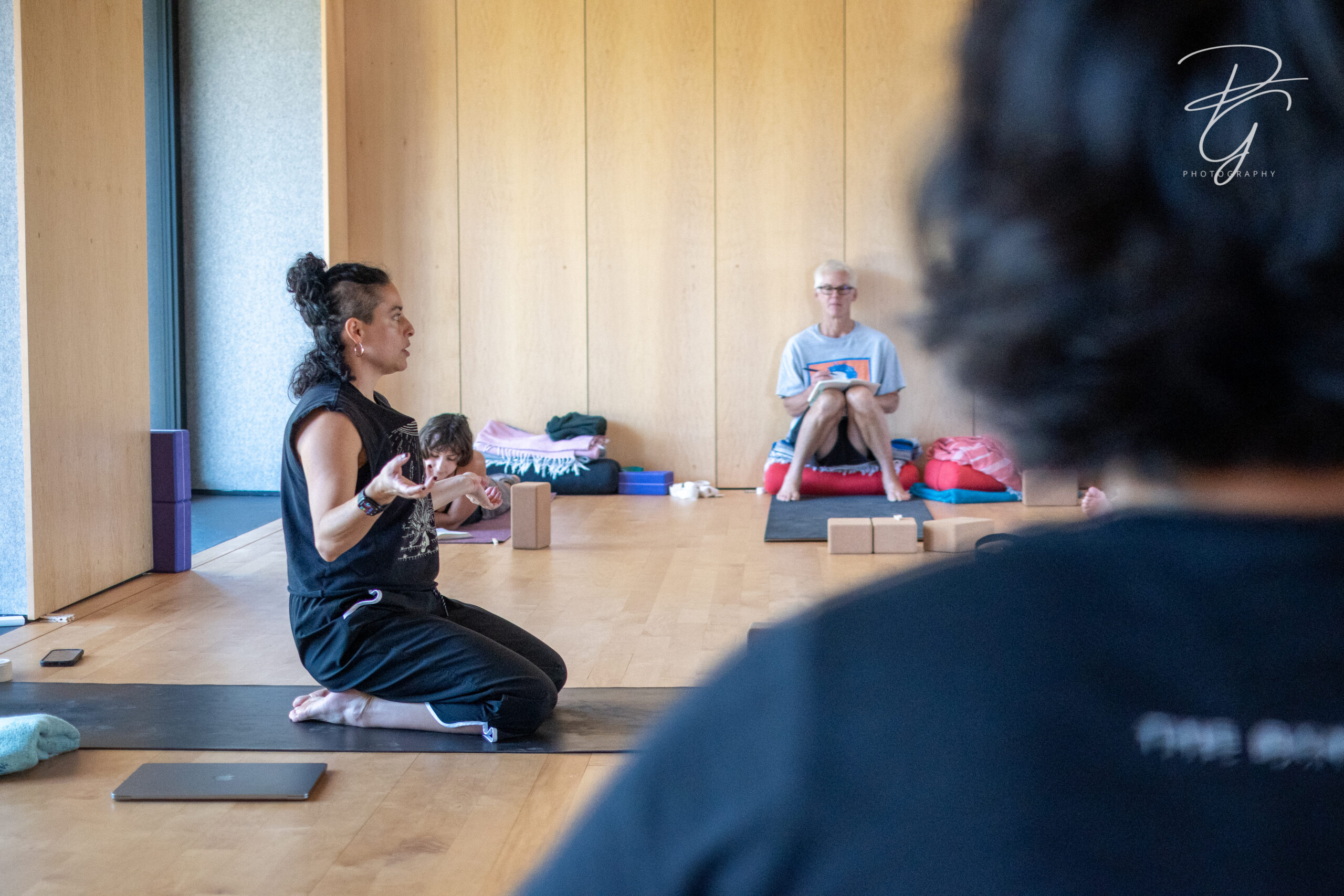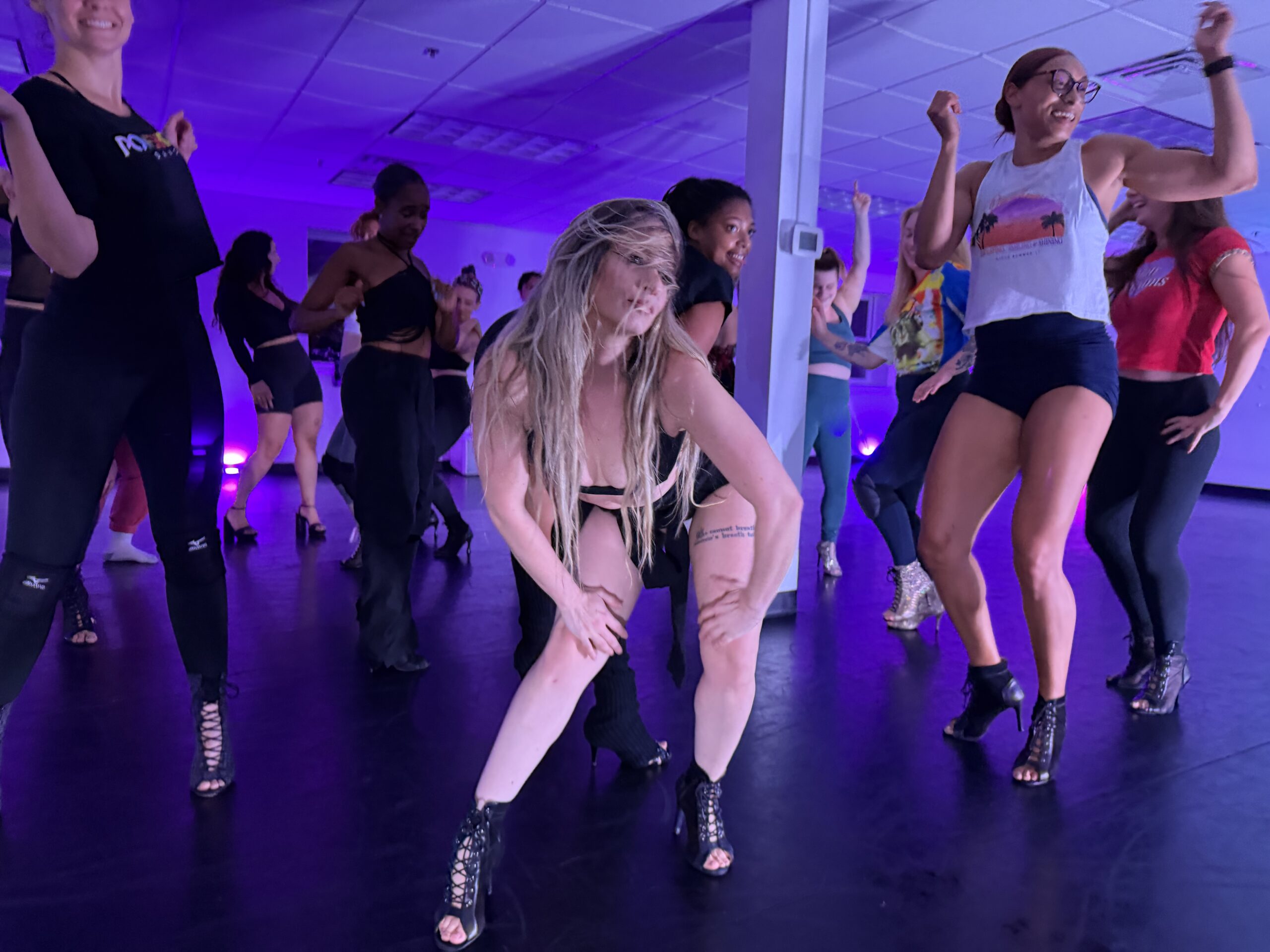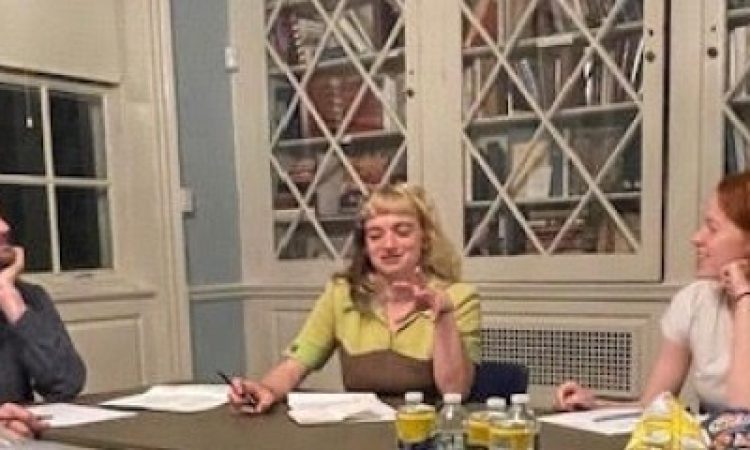
Amalia Colón-Nava and Caitlin Green split the DANCE UP CLOSE bill at Christ Church Neighborhood House before a full audience. After the performance, I met with audience members for a Write Back Atcha. As a warm up, we shared words that Green’s performance brought up for us: cellular, jarring, automated, systematic, rageful, trapped. Words soon turned into phrases: “ellipses of repetition” and “bubbling under the surface inside a container” (Abigail Mosier). Because both pieces contained significant textual elements, we asked ourselves: how do we represent the way words show up on stage? We experimented with describing movement, in all its ephemeral particularity.
Then, we wrote about Green’s Fury:
me
past + future
you
In Fury, Green’s unabashed rage became part of her identity. There was a palpable shift of dimensionality from the piece’s gentle introduction to its insane head banging and rolling on the floor, from live and in person to the audiovisual planar format.
– Greg Boehm
A thrashing whiplash, cross-screen body, flickering candle. A tormented soul expressed in tense fingers, shaking. Green stands in mourning, hair covering her face, hands tutting, pressing, and pushing into linear shapes before returning to wrap around each other, trying to wash her hands of this fury.
– Kalila Kingsford Smith
On° and on° and on°, we find each other near the well of tomorrow’s yesterday. Through you, I get to me. A collection of one, inside a bursting refraction of the “we.” The we that weeps for tomorrow’s history to be a sort of eternal flame, where the wax melts away all things no longer of life.
– Mosier
Colón-Nava collaged place, lineage, and time through colliding images, diary entries, and video footage in We could plant fruit trees / Podríamos plantar arboles frutales. In response, we considered new approaches to writing about dance, challenging ourselves to write in opposition to our intuitive modes.
Lost and finding, I see myself and my ancestors embedded in the fabric of the rug I lay on now, after all furniture has been removed.
– Mosier
“Quiero volver como un árbol.” Colón-Nava softly touches her heart and her stomach, eyes gazing as if into a memory. She reaches to the corner as she slips to the floor, oozing into the earth. “I want to be nutrient rich rock that filters water for fresh fish.” I see her yearning for a place, for her place, for her lasting place on this earth.
– Kingsford Smith
Finally, we sought out connections between the two pieces, letting our imaginations wander between the distinct worlds that each artist created.
The words plant the seeds that the body blooms out of. These dancers’ emotional topographies rise like mountains and fall like pools of water. I’m wrapped up in the ritual of creation and release.
– Kingsford Smith
In reaching for something, sometimes we need a hand. Perhaps there are ways to see beauty in mess by walking thru together, abandoning the addiction to blame, honoring/humoring the simplicity of story, and maybe learning about ourselves and each other along the way.
– Boehm
DANCE UP CLOSE: Amalia Colón-Nava and Caitlin Green, Philadelphia Dance Projects, Christ Church Neighborhood House, May 8-9
Join thINKingDANCE at our next Write Back Atcha on June 26th for DANCE UP CLOSE: Lily Kind.