Theatre Philadelphia and thINKingDANCE continue our partnership, begun in 2018, bringing coverage and new perspectives to Philadelphia’s vibrant theatre scene.
Candles, a new, competition-winning play by Angelina DeMonte, is an astonishing contribution to the national discussion about gun control. DeMonte, now in tenth grade at Harrington High School in Bryn Mawr, developed the dramatic piece during her residency with Philadelphia Young Playwrights, an organization that “inspires learning through playwriting” in the Philadelphia area since 1987. DeMonte was in eighth grade when she put herself to work, influenced by the 2018 Stoneman Douglas High School shooting in Parkland, FL, and the strong student response that followed.
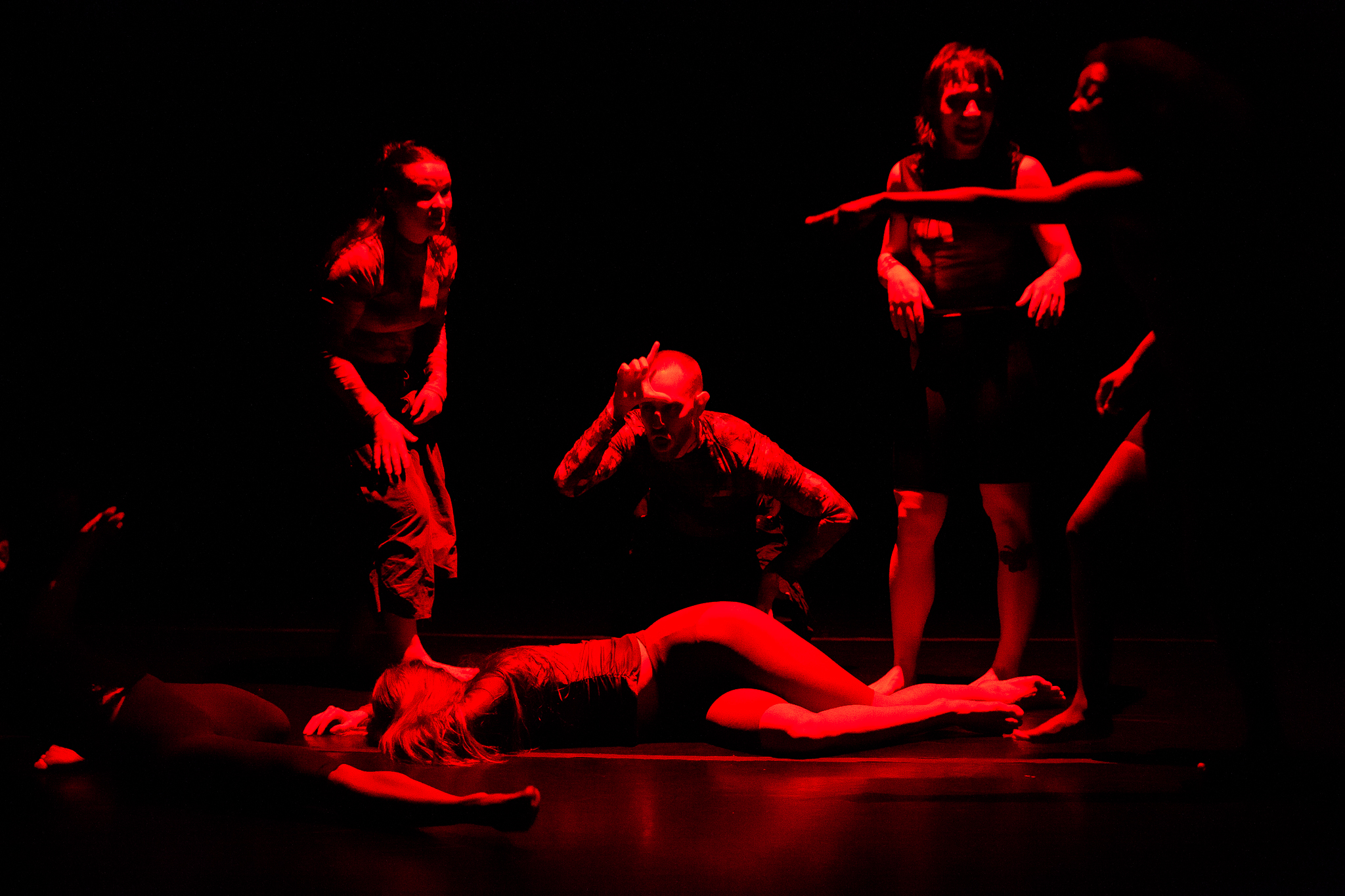
Professionally produced by Philadelphia Young Playwrights and directed by Bi Jean Ngo, the performance brings on stage Rose (Danielle Coates), Amara (Ang Bey), Jace (Tyler S. Elliott), and Augustus (Yannick Haynes), all students of a suburban high school, who regularly meet to work on Lion’s Den, the school’s magazine. Except for Amara, the oldest and most experienced of them, they are quite casual about this commitment, spending their time bickering more than working on their stories. In fact, they haven’t published anything in a while, a good reason for the school board to close the magazine down. Amara, an aspiring poet and natural leader, is determined to save Lion’s Den and urges her younger peers to get back on track. A local poetry slam, where Amara wants to present one of her poems, “Candles,” should be their next article, an article that can save the magazine. But then all their plans are shattered when the school is attacked by a shooter, murdering twelve students, including Amara and Maya, Augustus’ little sister.
The young survivors struggle through this trauma, wrestling with mortality and carving their personal spaces for healing. During the attack, Amara adds several lines to her poem that reappears through the performance as one of its leitmotifs: “When you are gone, what will you become? Just a candle in the hands of your loved one.” As the drama progresses, we watch these teenagers, at first carefree, laid-back, and unfocused, transform into political activists with a clear objective, who use their art—writing, speaking, and music—to ignite political change. The actors embody the complex emotions ranging from pain, grief, anger, and numbness to guilt with riveting intensity.
In a hauntingly beautiful scene transcending life and death, Amara rejoins Rose, who has set Amara’s poem to music, to sing “Candles” in a duet that emanates acceptance and newly found strength. Dimly lit (lighting by Abby Schlackman) and facing the audience or each other in a tender embrace, their voices reverberate around the shared space of the stage and the auditorium: “We are not invincible. We are not invisible. Do you see me?”
The pointed critique of adults and, above all, adults in power—their failure to listen to young people and to protect them—runs through the play. Rose, stubbornly resistant to seeing a psychotherapist, snaps out in frustration: “What have adults ever done to help us?” Then there is the hostile school board, always ready to shut down the magazine, and Alex Blaire, a sly journalist, who deliberately misrepresents Augustus’ testimony about his relationship to the shooter (later, pressed by the kids, he helps to amplify their political message). Tellingly, it is the teacher, Mr. Weatherbee (Owen Corey), like the kids voiceless in the face of the powerful, who fights sympathetically alongside the students to preserve the club.
The play, a poetic portrayal of the students’ personal and political transformation, is also a direct call for action. This comes through clearly in the final scene, when all protagonists, facing the audience, recite in unison: “This is not a dream. This is not a play. This is reality.” And they continue: “Pick up! Speak up! We can’t let this keep happening.”
On the night I attended, the production was met with a standing ovation. During the post-show talkback, audience members applauded the outstanding ability of the young playwright and the cast to depict such extraordinary suffering. Many were visibly moved, even to tears. Lisa Nelson-Hayes, executive director of the Young Playwrights of Philadelphia, who moderated this session, reported that for their annual competition, the organization had received 660 submissions, and thirty were about gun violence. Many of them, Nelson-Hayes said, suggest that it’s not a matter of if a shooting in their schools happens but when. “What do we, as adults, need to do for you?” someone in the audience asked. “Let’s talk about it; let’s not let the debate die,” DeMonte proposed.
Candles is a powerful, deeply touching way to keep the discussion alive, and DeMonte is an inspiring talent to follow. With young writers like DeMonte, the future is hopeful.
To join the conversation, follow thINKingDANCE and Theatre Philadelphia online and on social media to read, share, and comment.
Candles, Philadelphia Young Playwrights, Arden Theatre’s Hamilton Family Arts Center, Jan. 16-25