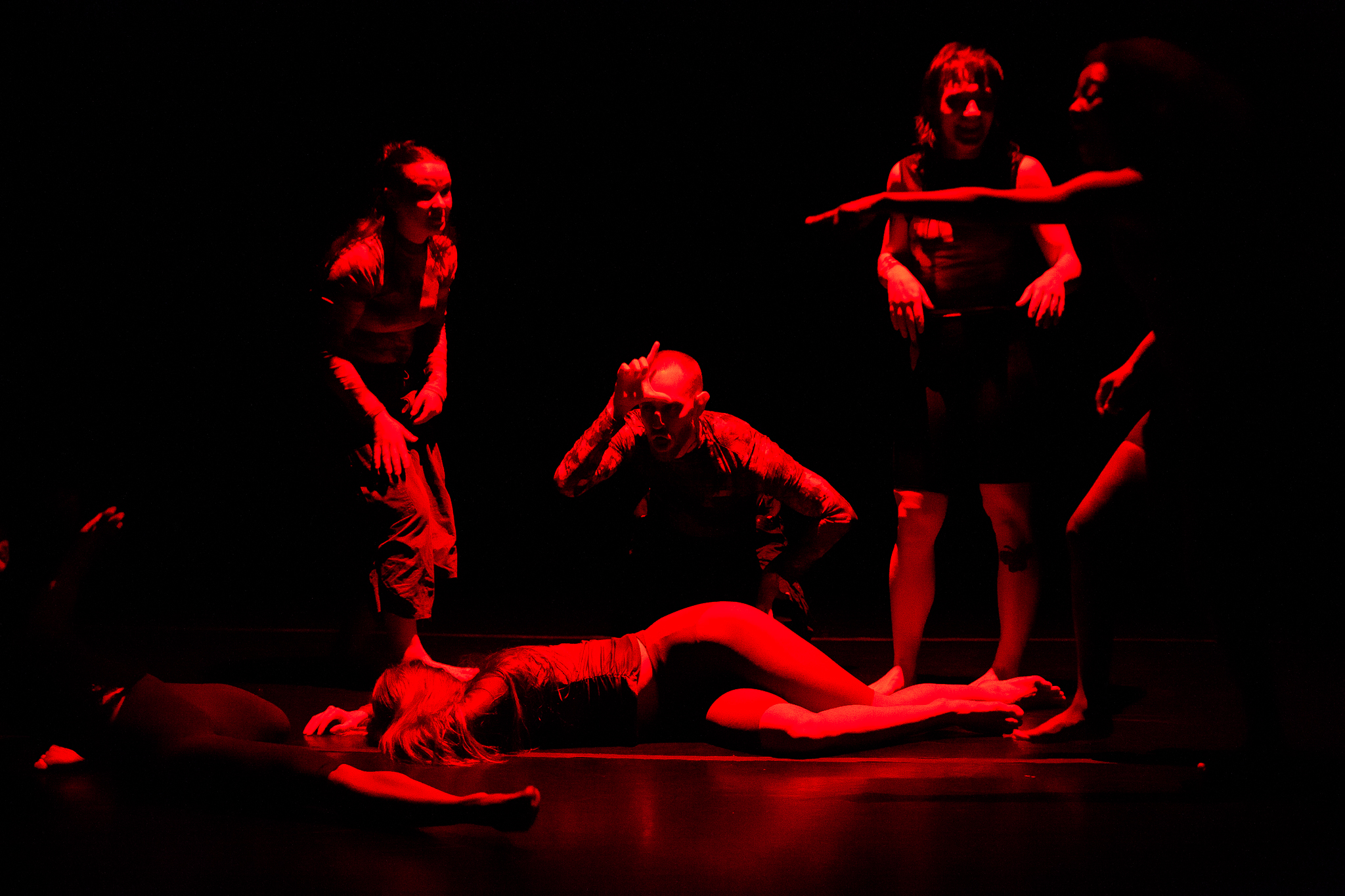
The enthusiastic Christine Cox, BalletX co-founder, greeted a full house prior to The Little Prince, raving about BalletX’s current successes: a new home base at 19th and Washington, the launch of public dance classes, outreach to 300 public school students, and nation-wide performances. Regardless of its increasing popularity, BalletX’s first attempt at a full-length work, choreographed by Annabelle Lopez Ochoa, was less than polished. The Little Prince is known for illuminating the varying sides of human character, but amid costume inconsistencies and overbearing props, BalletX’s version only succeeded in bringing a few of them to light.
I knew that the production had been widely embraced by its audiences, but I did not enter the theater in a nostalgic daze like many of the patrons. Nor am I the most avid follower of the company, having seen only a handful of its shows.
Five large piles of white cardboard boxes lined the stage. Slow, deep tones, like rolling thunder in a windstorm, filled the air. The Snake (Stanley Glover)—a tall, slender man in a shimmering black unitard, accessorized with bowler hat and cane—slithered and popped, alternating between the fluidity of running water and the striking effect of lightning. From wrist to toes, his body parts fluently curved around one another, like a spinning ball of almost-tangled ribbon. His pauses were unexpectedly brief and breathtaking. From behind the boxes, 2-D cutout symbols of the story emerged, attached to the tops of long, wooden sticks. The yellow sun lingered, and the snake bowed. In that serene moment, The Pilot (Zachary Kapeluck) clamored in alongside ensemble members carrying large, puzzle-shaped pieces that loosely fit together to create his cardboard plane. With the sound of an abrupt crash, the pieces splattered around him.
Basic technique suffered from the use of dramatic elements. The Snake’s cane occasionally caused him to fumble, interfering with an otherwise seamless stream of smooth steps. The Rose (Francesca Forcella) wobbled from her pointe. Dancers tripped on long, blue ribbons, almost toppling a pile of boxes. I was frequently jolted from the escape of my imagination.
The dancers were generally frolicsome with the material, but they seemed disconnected from the whimsy of the fantasy world. Characters’ movements felt contrived and were executed without heartfelt intention. A dancer, meant to restrain The Little Prince (Roderick Phifer) from approaching The Rose, weakly pawed at the space surrounding his legs. The Geographer (Caili Quan) positioned her body to gaze dreamily through a telescope, but her eyes were fixated elsewhere.
I was particularly bothered by The King’s (Blake Krapels) costume. Head in hands when the title traveler approached, he wore a paper crown and cape. It was ill-fitting, too short to even cover his stomach. The cape was of a wrinkled material that resembled fabric scraps taped together. Both the orange-red shade and the character’s tone lacked any sense of majesty. I found the quaint qualities that provided a child-like essence to be lacking in professionalism and creativity.
In a fast-paced trek through a laundry list of character scenes, I was grateful for descriptive program notes to make sense of some transitional gaps. I longed for the Lamplighter (Andrew Yorita) and The Narcissist (Skyler Lubin) to stay a while longer. The Narcissist longingly pleaded with the audience to applaud her, extending her neck forward and slowly moving her hands to clap, coaxing the audience with a sweet demeanor. Each of their solos were jaw-dropping. With precision and clarity, their characters felt well-developed, with personality-infused movement that was undoubtedly applaudable.
Periodic glances beyond the fourth wall reminded me that the dancers were storytelling to the crowd. To what extent was I expected to engage my own imagination?
The Snake often embodied the qualities of Death in this story. At one moment, he commanded The Pilot to stand by, physically prodding him with his cane. In another instance, he stripped The Pilot of his canteen during a time of physical weakness. Like The Snake’s weaving presence throughout the show, Death is a wavering constant. With a focus on her own mortality, Ochoa’s program notes explained that she featured The Snake because “[d]eath is omnipresent and the only certainty in our lives. We shouldn’t fear it; on the contrary, we should let it inspire us to live without restraint.”
Though I was left unimpressed, the audience stood without hesitation to praise the cast. Sometimes wistful memories and messages of humanity are what the world craves—a piece of each character from The Little Prince resides within each of us.
The Little Prince, BalletX, The Wilma Theater, July 10-21.