In a quest to reach new audiences for performing arts in Philadelphia, Theatre Philadelphia and thINKingDANCE are joining forces and exploring how dance writing and discourse can provide new perspectives on theater. Since May 2018, tD writers have been lending their varied backgrounds, interests, and approaches to criticism to professional works of theater in Philadelphia. Let us know what you think in the comments!
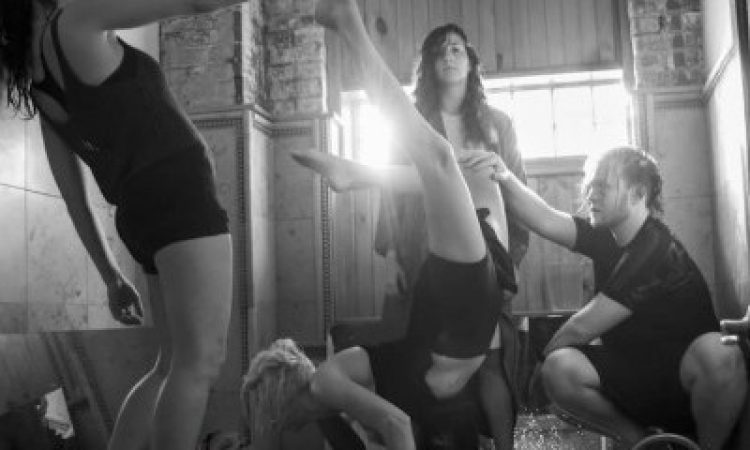
Conceived by Almanac Dance Circus Theater’s associate artists Desiree Hall and Mia Rocchio, The Edge tells two stories: one of Hall’s partner suffering from stage IV breast cancer and the other about Rocchio’s father’s struggle with Alzheimer’s disease. Depicted through dance, spoken word, acrobatics, and sound, this Fringe Festival performance embodies the painful, melancholy, humorous, and emotional moments of witnessing and experiencing illness.
Opening the show with a movement-infused monologue, Rocchio immediately draws my full attention. Performing the role of Hall’s partner, she skillfully portrays the mixed and confusing emotions of living with cancer. She lightheartedly jokes about the possibility of stealing Q-tips from the doctor’s office and moments later loses her composure. Her sense of humor falls away to reveal the shock of her diagnosis, all while traversing the stage, twisting and falling in and out of the floor. Later, in a hilarious interaction with Jess Adams, Rocchio attempts to tell Adams about her illness only to find herself comforting her friend. Their limbs tangle together as Adams sobs, inadvertently forcing Rocchio into the position of caretaker.
Like the first iteration of many new productions, there are sections of this performance that call for editing and rethinking. Some of the ensemble movement sections lose my attention and early on there is a dialogue between Stephen Peterson and Macy West that, while comical, feels disconnected from the driving narrative.
In the second half of the show, Peterson, playing the role of Rocchio’s Alzheimer father, masterfully illustrates the tension of not fully grasping the present while vividly remembering the distant past. Switching between scenes of lucid memories and confusion, Peterson ripples between bursts of joy, bewilderment, fear, and stubbornness. Hall, who appears to personify and guide Peterson through his memories, and Peterson share an electric and captivating relationship which provides a stark, emotional contrast to Rocchio’s role as wife and caregiver. While Hall is the bliss that existed before disorientation, Rocchio’s character is grounded in the challenges of the present.
The performance ends with a powerful duet between Hall and Rocchio speaking honestly as themselves about the trials of the bystander to illness. The two performers move gently, providing one another with support and dancing a duet of soft comfort. The Edge processes the raw, complicated, stinging, sometimes comical, and extraordinarily human experience of living with illness and the aftershocks absorbed by loved ones and caregivers.
The Edge, Almanac Dance Circus Theater, Community Education Center, 2019 Fringe Festival, Aug. 27-Sept. 12.