Rare is a dance performance perfumed with the aroma of plantains cooking with fresh garlic in joyful synchronicity with the pleasures of quotidian life, memory, cultural history and passionate art making. Marion Ramirez’s Musa Paradisiaca is named after the banana tree of her native Puerto Rico, a tree that bears edible greenish starchy fruits. Through bewitching craft the choreographer folds layers of personal life and a broader cultural setting into an exhilarating full-evening performance that brought cheers from her opening night audience.
At stage right is a domestic interior with intermittent cooking by all dancers and musicians of the seven-member cast. Performers demonstrate preparation of two separate plantain dishes: first green plantains with garlic (demonstrated through the conceit of a TV cooking show) and a second sweeter, yellow plantain plate (with a caramel sauce recipe in the program). The cooking continues as the dance and music sections proceed stage left. In the transitions between scenes, we hear the voice-over of Ramirez’s 103-year-old grandmother, Alicia Ramirez, speaking in Spanish of her plantain recipes (and about the arranged marriage she had entered in Puerto Rico). A small altar with candle, cinnamon, and personal objects stands far downstage near the audience.
The work skillfully merges life-history and culture with Ramirez’s body-as-dancer, and makes stirring art of it all. A collection of used pots and pans becomes the embodiment of a family’s collective memory as dancers Michelle Tantoco, Megan Wilson Stern, Jung Woong Kim and Tim Early create intimate duets while beating out percussive rhythms along with musicians Victor Pablo Garcia-Gaetán and Dennis Guevara. Ramirez, whose large and inflexible feet as a young girl were described as “plantain feet,” not fit for ballet, begins a solo standing within a large pot, feet hidden, striking out on the aluminum what sounds like a flamenco rhythm. Her solo and the dances of others in her cast reflect her own body’s history of dance that includes not only flamenco but also Latin-American social dance, modern dance, ballet and contact improvisation—a rich stew from the postmodern cookbook.
Ramirez has a fiery, supernatural presence accentuated throughout the evening not only by her flowing curled hair and striking blue eyes and gaze, but also by her costume—yes, of a plantain-leaf skirt with a corseted breastplate of plantains circling her chest like snakes borrowed from Medusa. This costume, requiring nightly refrigeration, was expertly designed by Patricia Dominguez. Ramirez becomes a spirit from some tropical midsummer night’s dream. Her solo, with one foot resting on a small wooden bowl for chopping herbs, includes a reference to music from the mad scene from Giselle. And if not touched with madness, Ramirez plants seeds of surrealism throughout—as in a mini-scene where the head of a smiling Stern, nestled next to a large pot, moves back and forth behind the kitchen wall, framed by a small rectangular window. These fictional narratives add to the evening’s broth.
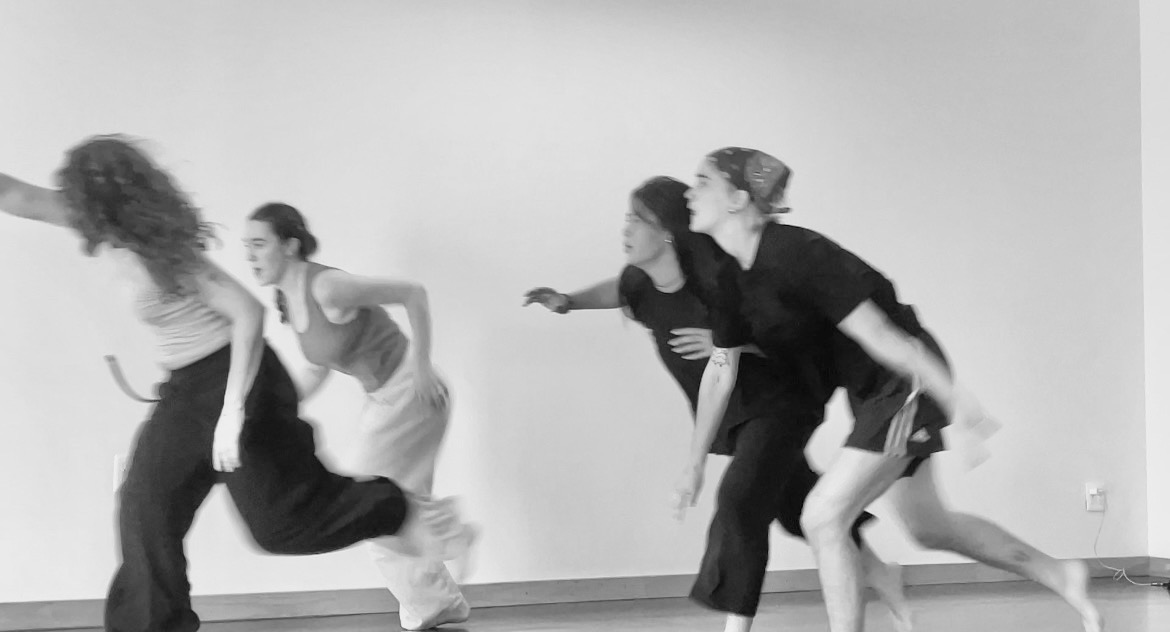
Ramirez’s dancers fully embrace the many dance styles and roles that the work demands of them. Jung Woong Kim in particular shows comic genius in his playful, committed duet with a rolling bowl whose every twist and turn he anticipates with lightning adjustments of his body. His contact duet with Ramirez shares intimacy both through weighted connections and the poignant spaces created when they move apart.
The spirited music by Garcia-Gaetán and Guevara mirrors the richness of the dance and design elements, mixing classical and contemporary Puerto Rican music with jazz elements and even music derived from a Nintendo game. Jimena Alviar’s lighting design deftly captures the multiple actions on stage against a backdrop of an abstracted plantain leaf.
The performance ends with a spotlight on Stern before a large cooking pot; as she lifts the lid, a cloud of steam envelops her and the stage quickly darkens. An act of domestic life, repeated a million times a day throughout the world, instantly becomes memorable art. But it’s not quite the end, as the audience soon gathers with the performers to partake of those plantains and the other delicacies offered them.Musa Paradisiaca, choreographed by Marion Ramirez, Temple University Conwell Dance Theater, March 28-29, 2014, www.marionramirez.com.